
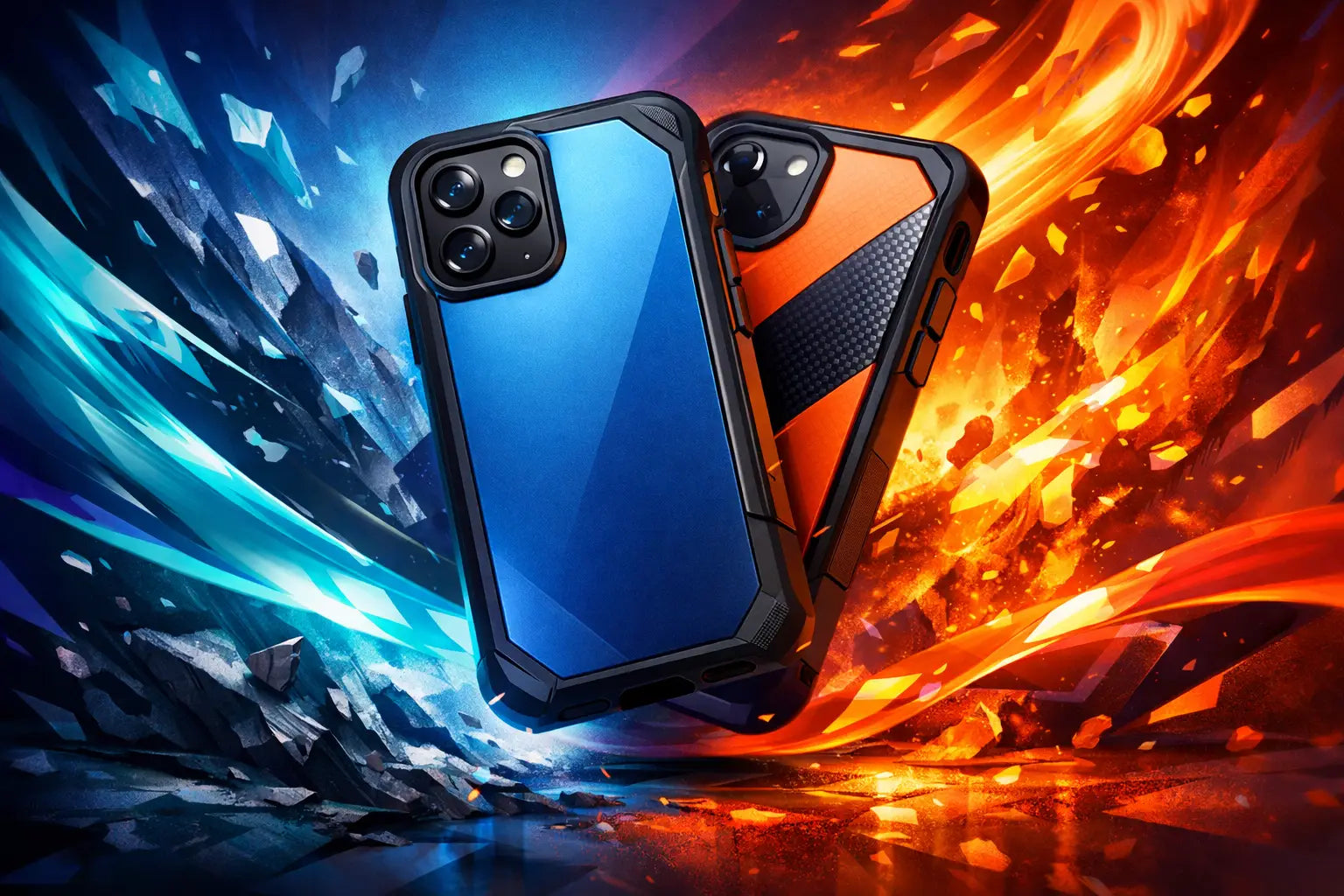
A phone case usually proves itself in one ugly second - the slip off a desk, the miss on the couch edge, the parking lot drop you replay in slow motion. That is exactly why people ask what makes phone cases durable. It is not one magic material or one marketing claim. Real durability comes from how a case is built, how it fits your phone, and how well it handles repeated impact without turning bulky or boring.
What makes phone cases durable in real life
Durability sounds simple until you compare a case that survives one dramatic drop with a case that still looks good after six months in a backpack, on a gym floor, and in and out of jeans pockets. A durable case has to do both. It needs to protect against impact, resist everyday wear, and keep its shape over time.
That means material matters, but design matters just as much. A hard shell alone can crack. A super soft case alone can stretch out. A beautiful case that chips around the corners after a few weeks is not durable, even if it looked promising on day one. The best cases balance shock absorption, structure, grip, edge protection, and long-term resistance to scratches, yellowing, and warping.
Material is the first big clue
If you want to know what makes phone cases durable, start with the material blend. Most strong cases are not made from just one thing. They combine materials because different materials solve different problems.
TPU absorbs shock
TPU, or thermoplastic polyurethane, shows up in a lot of protective cases for a reason. It has flexibility, which helps absorb impact instead of sending all that force straight into your phone. It also adds grip, which matters more than people think. A case that is less slippery gets dropped less often.
The catch is that TPU quality varies. Cheap TPU can stretch, discolor, or feel gummy after heavy use. Better TPU keeps its shape longer and stays comfortable in your hand.
Polycarbonate adds structure
Polycarbonate is the hard shell player. It gives a case shape and rigidity, which helps distribute force across the surface during a drop. It is also great for keeping printed designs crisp and vivid, which is a big plus if you want protection without settling for a plain case.
On its own, though, hard plastic can be less forgiving on impact. That is why a layered build often performs better than a single hard shell.
Silicone feels soft, but it depends
Silicone cases can feel great and offer decent grip, but not all silicone cases are built for long-term durability. Some attract lint, some tear more easily, and some lose their clean look fast. A high-quality silicone case can work well for lighter protection, but for heavier daily abuse, mixed-material construction often holds up better.
The corners do more work than the back
Most drops do not land flat. They hit corners, edges, or awkward angles. That is why the toughest cases are designed to reinforce the corners instead of focusing only on the back panel.
Corner protection matters because corners take concentrated force. If a case has air-cushioned corners, thicker bumpers, or reinforced edge geometry, it can do a much better job absorbing shock where your phone needs it most. This is one of those details you do not notice until it saves your screen.
Slim cases can still be durable here, but they need smart engineering. Thickness alone is not the whole story. A bulky case with weak corner structure may perform worse than a slimmer one with better impact design.
Raised edges are not just a style detail
A case should lift the screen and camera slightly off flat surfaces. Those raised edges are small, but they matter every single day. Set your phone face-down on a table, slide it across a countertop, or drop it near a rough surface, and that extra lip can prevent direct contact.
The same goes for the camera area. Phones keep getting thinner while camera bumps keep getting bigger. A durable case needs enough raised protection around the lenses so they are not the first thing hitting the table. If a case looks sleek but leaves your camera ring exposed, that is a style choice with a price tag.
Fit changes everything
A loose case is a weak case. If it shifts around, gaps open up around the frame, buttons feel mushy, and impact protection drops fast. A durable case should fit snugly around your exact phone model, including cutouts, button placement, speaker openings, and camera shape.
This matters even more with newer phones, especially models with MagSafe or foldable designs. If the alignment is off, magnets can feel weak, accessories can sit awkwardly, and the case can wear unevenly. A strong fit keeps the whole case working as one system instead of a shell that just happens to be on your phone.
Durability is also about surface wear
People usually think about drops first, but daily wear is where weak cases start to show themselves. Scratches, fading, peeling graphics, stretched corners, and yellowing edges are all durability issues. A case that protects well for two weeks but looks wrecked after a month is not giving you much value.
Scratch resistance and finish quality
Hard coatings, quality printing methods, and well-finished surfaces help a case keep its look longer. This is especially important for bold, graphic designs. If the artwork starts wearing off quickly, the case loses part of what made it worth buying.
A durable finish should handle keys, bags, desks, and regular handling without looking tired too soon.
Yellowing resistance
Clear and lighter-toned cases often struggle here. UV exposure, heat, skin oils, and air all play a role in discoloration. Some level of aging can still happen over time, but better materials slow it down significantly. If a case starts yellowing fast, that usually points to lower-grade components.
Grip is underrated protection
Here is the truth: the best drop protection is avoiding the drop in the first place. Grip helps with that. A case with slightly textured sides, a non-slippery finish, or a shape that feels secure in your hand can make a real difference.
This is one of those trade-offs where personal preference matters. Ultra-smooth glossy cases can look amazing, but they may feel less secure. More textured cases usually give better hold, though some people prefer a cleaner feel. The sweet spot is a case that looks polished without becoming a hand gym challenge every time you text one-handed.
Thin versus protective is not a simple fight
A lot of shoppers think they have to choose between a slim case that looks good and a heavy-duty case that feels like a brick. That used to be more true than it is now.
Modern case design has gotten smarter. Better material combinations, reinforced corners, and more precise construction mean you can get strong protection without turning your phone into a dumbbell. Still, there are trade-offs. If you are hard on your phone, commute a lot, or toss it into crowded bags, a little extra bumper protection is worth it. If you mostly work from home and want a sleek profile, you can go slimmer without going flimsy.
The key is being honest about your routine. The right case for a careful user is not always the right case for someone who drops their phone twice before lunch.
What makes phone cases durable beyond drop tests
Drop-test claims can be useful, but they are not the whole picture. A case can survive lab conditions and still annoy you in daily life if the buttons are stiff, the edges peel, or the finish wears out fast.
Durability should include how the buttons click after months of use, whether the sides loosen over time, and whether the case still fits properly after temperature changes, travel, or constant removal. Good durability feels consistent. The case still looks sharp, still grips well, still protects the camera, and still works with charging and accessories the way it should.
That is especially true for magnetic accessories. If a case is MagSafe-compatible, the magnet array needs to be integrated well enough that chargers, power banks, and holders connect securely. Weak alignment is not just annoying. It adds wear from repeated repositioning and can make the whole setup feel cheaper than it should.
Style and durability should work together
There is no reason a durable case has to look generic. Good design should not cancel out good protection. In fact, when a case is well made, the visual side often lasts longer too. Colors stay cleaner, prints stay sharper, and the whole case feels more premium in your hand.
That is where brands that care about both function and aesthetics stand out. CASETEROID leans into that mix - bold design, strong materials, and practical details like MagSafe compatibility - because most people do not want to choose between protection and personality.
If you are shopping smart, look past the hype words and pay attention to the build. Check the materials, corner design, raised edges, fit, grip, finish, and how the case handles your actual day. A durable phone case is not just one that survives a fall. It is one you still trust, and still want to carry, long after the first drop.
Are Phone Cases Worth Replacing? Yes, Usually
Silicone Case vs TPU Case: Which Feels Better?