
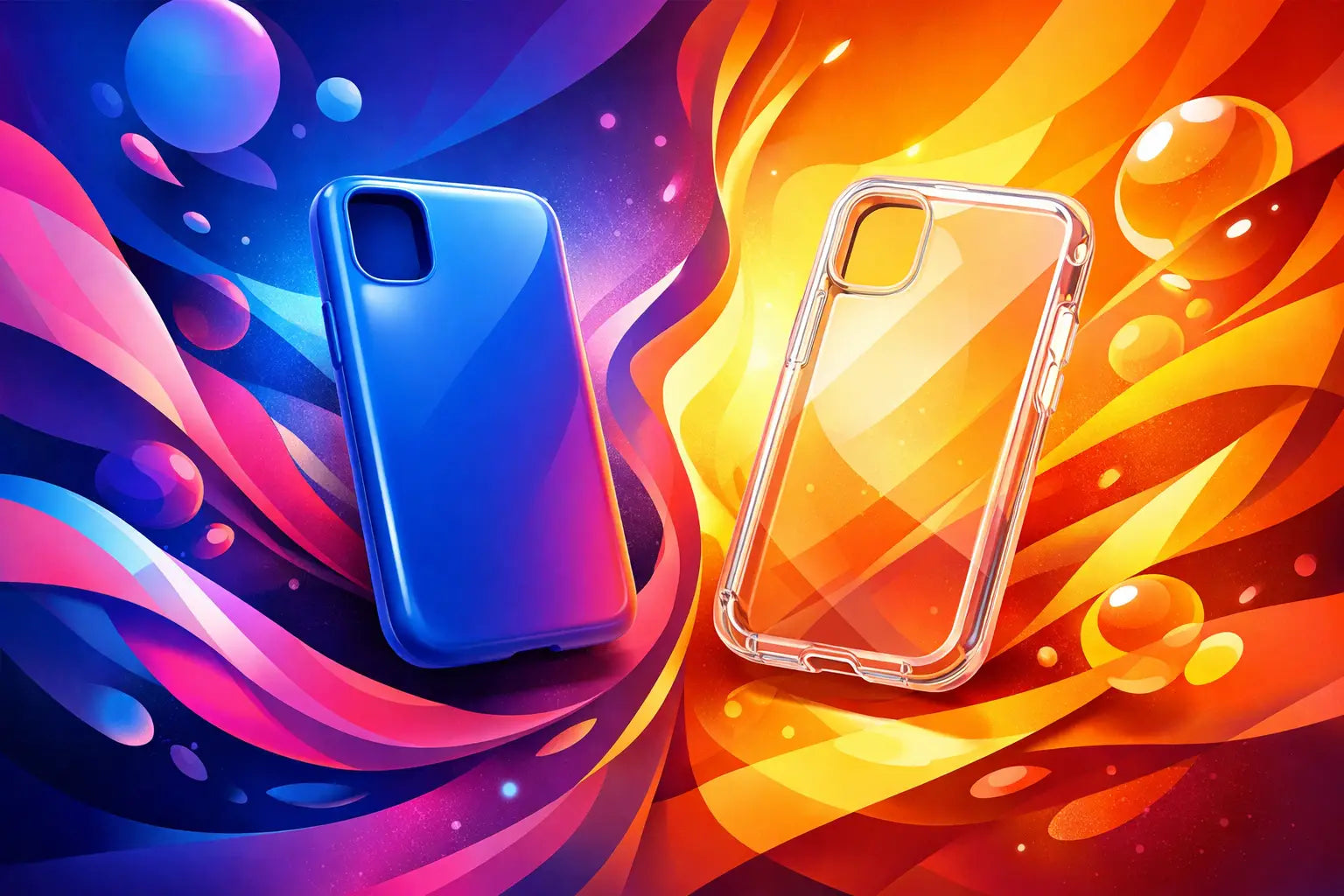
You feel the difference before you even drop your phone. In the silicone case vs TPU case debate, the real question is not which material sounds better on paper. It is which one matches how you actually use your phone - all day, every day, in your hand, pocket, bag, car mount, and late-night scroll sessions.
That is why this comparison matters. A phone case is not just a shell around your device. It changes grip, comfort, cleanup, pocket feel, button response, and how confident you feel carrying a $1,000 phone without treating it like glass. If you care about style and protection equally, material choice is a bigger deal than most product pages make it seem.
Silicone case vs TPU case at a glance
Silicone and TPU can look similar in photos, but they behave very differently in real life. Silicone usually feels softer, grippier, and more cushioned in the hand. TPU, short for thermoplastic polyurethane, tends to feel smoother, slightly firmer, and more structured.
If you want the fastest answer, silicone usually wins on soft-touch feel and cozy grip. TPU usually wins on shape retention, slimness, and long-term practicality. That does not mean one is always better. It means each material shines for a different kind of user.
How silicone feels in everyday use
Silicone cases are all about touch. They have that soft, almost velvety finish that instantly feels premium and comfortable. If you are on your phone constantly, that hand feel can be a huge selling point. It is warm, flexible, and less plasticky than many hard or semi-hard cases.
The upside is obvious - grip. A silicone case is less likely to slip off a couch arm, slide across a desk, or skate out of your hand when you are trying to text one-handed. For people who are always multitasking, that extra friction can be a lifesaver.
The trade-off is that silicone can attract lint and dust more easily, especially if it has a very soft exterior coating. It can also feel a little sticky going in and out of tighter pockets. If you wear jeans often or keep your phone in a small crossbody bag, that extra grab can be either reassuring or annoying, depending on your patience level.
How TPU feels in everyday use
TPU has a more flexible-than-plastic, tougher-than-silicone personality. It bends, but not as much. It grips, but not as aggressively. It is a favorite for slim protective cases because it balances structure and shock absorption without getting too bulky.
In daily use, TPU usually slides into pockets more easily and keeps a cleaner look with less fuss. It feels more streamlined, especially for people who hate cases that make their phone feel gummy or oversized. Buttons can also feel a bit crisper in a well-made TPU case, since the material holds its shape better.
The downside is that some TPU cases can feel less luxurious than silicone if the finish is too plain or glossy. And while TPU has grip, it usually does not have that cloud-soft hand feel people love in silicone.
Which protects better from drops?
This is where people expect an easy winner, but drop protection depends on more than material alone. Case thickness, corner reinforcement, raised edges, interior construction, and fit all matter.
That said, silicone is naturally good at absorbing shock because it is soft and impact-friendly. It can cushion minor drops well, especially in everyday accidents like a slip from the couch, nightstand, or kitchen counter. The softer feel gives people a sense of safety, and sometimes that feeling is earned.
TPU, though, often performs better in cases designed for repeat real-world impact. Because it has more structure, it can help distribute force while keeping the case from becoming too floppy. That is one reason TPU shows up so often in protective case designs. It gives manufacturers more control over shape, edge coverage, and reinforced corners.
If your top priority is serious day-to-day durability, TPU often has the edge. If your biggest concern is preventing slips before drops happen, silicone has a strong case for itself.
Grip, bulk, and pocket feel
This is where personal preference really takes over. Silicone usually feels grippier, but that can also mean it drags against fabric. Some people love that because it feels secure. Others get tired of fighting their pocket every time they pull their phone out.
TPU usually lands in the middle. It offers enough grip to feel safe, but enough glide to stay convenient. For a lot of people, that balance makes TPU easier to live with long term.
Bulk is another factor. Silicone cases can feel thicker because the material has a softer, more padded presence. TPU can often be molded into slimmer profiles while still feeling stable. If you want a case that protects your phone without changing its silhouette too much, TPU usually looks cleaner and leaner.
Style and finish matter more than people admit
Let us be honest - nobody shops for a phone case based on polymer science alone. You want your case to look good. It lives in your hand constantly, shows up in mirror selfies, sits on tables, and says something about your taste.
Silicone cases usually lean sleek, minimal, and soft-touch. They often give off that modern, monochrome, elevated look. If your vibe is clean colors and a smooth matte finish, silicone can absolutely hit.
TPU is more versatile in design. It can be clear, tinted, smoky, glossy, matte, printed, or combined with other materials more easily. That opens the door to bolder visuals, sharper edges, and more creative styling. For shoppers who want protection without giving up personality, TPU often gives designers more room to play.
For a brand like CASETEROID, where strong design is part of the point, TPU can be especially appealing because it supports vibrant looks while still delivering practical protection.
Yellowing, wear, and long-term appearance
If you have ever owned a clear case, you already know this section matters. TPU, especially clear TPU, can yellow over time depending on UV exposure, heat, skin oils, and overall material quality. Not every TPU case yellows quickly, but it is a known issue, especially with cheaper clear options.
Silicone does not usually yellow the same way, but it can pick up marks, oils, and scuffs. Lighter colors may show dirt more easily, and very soft finishes can start to look worn if they rub against keys, rough bags, or dirty surfaces often.
So which one ages better? It depends on the finish and color. Opaque silicone often hides aging better than clear TPU. But high-quality TPU in a darker or printed finish can stay looking fresh for a long time. If appearance over months matters to you, do not just look at the base material. Look at the finish, color, and how you carry your phone.
MagSafe and fit
For MagSafe users, material alone is not the full story. Magnet strength depends on the magnet array inside the case and how well the case is engineered around it. Still, material affects fit and stability.
TPU often works well in MagSafe-compatible case construction because it keeps a more precise shape. That can help with alignment, snugness, and overall consistency. Silicone can absolutely work with MagSafe too, but the quality of the internal structure matters a lot.
If you use magnetic chargers, wallets, mounts, or power banks regularly, pay attention to product design, not just whether the case says silicone or TPU.
So, which one should you buy?
Choose silicone if you want a softer feel, stronger grip, and a case that feels comfortable from the second you snap it on. It makes sense for people who care most about hand feel and want something that feels cozy, simple, and secure.
Choose TPU if you want a slimmer profile, easier pocket access, stronger shape retention, and a more practical mix of style and durability. It is usually the better match for people who want an everyday case that keeps up without needing much babysitting.
If you are stuck, think less about the material name and more about your habits. Do you drop your phone because it slips, or because life gets chaotic? Do you want soft-touch comfort, or a cleaner, more structured case? Do you switch cases for outfits, or keep one on for months?
The best case is not the one with the flashiest material label. It is the one that fits your routine, your style, and the way your phone actually travels through your day. Pick the one you will enjoy using, because the case that feels right is usually the case that stays on.
What Makes Phone Cases Durable?
Are MagSafe Power Banks Safe to Use?