
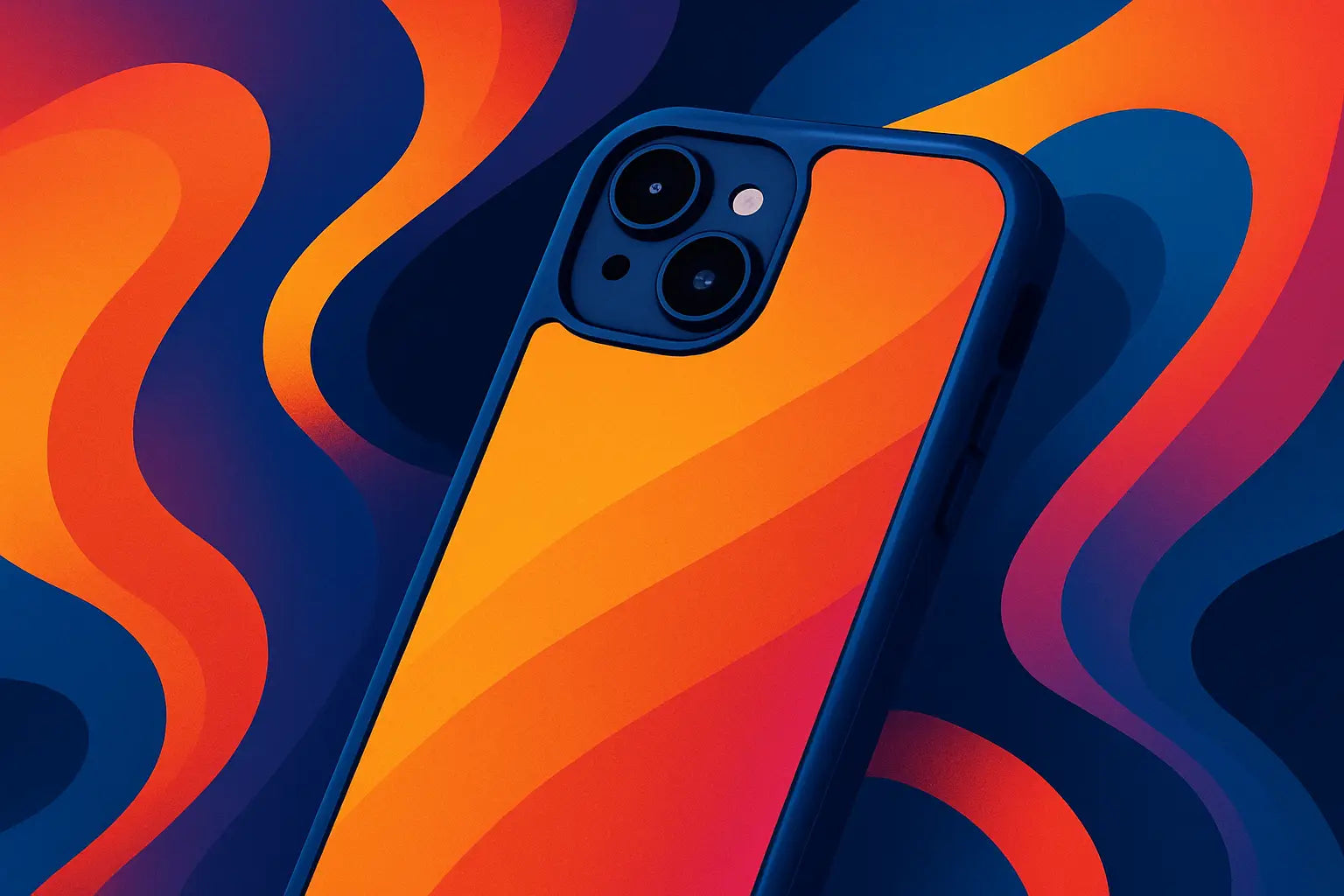
You know the moment: you set your iPhone on a cafe table, catch the reflection, and think, “This thing looks too good to hide.” Then your brain immediately follows with, “Also, please do not let this slip off the edge.” That tension - style vs. safety - is exactly why shopping for stylish phone cases for iPhone can feel weirdly high-stakes.
The good news is you do not have to pick between a case that looks like a fashion accessory and a case that’s built like a brick. You just need to know what details actually matter (and which ones are mostly marketing).
What “stylish” really means in 2026
Style is personal, but patterns are real. The iPhone case trends that stick around usually do two things at once: they add visual identity and they make the phone nicer to hold. A case can be “cute” on a product page and still feel wrong the second it’s in your hand - too slick, too bulky, too plasticky, too loud.
Right now, “stylish” tends to fall into a few lanes: bold graphic prints, clean minimalist solids with elevated texture, and high-contrast accents (camera ring details, two-tone edges, glossy-matte combos). But the difference between “trendy” and “actually wearable” is whether it plays nicely with your everyday stuff - your bag, your nails, your gym gear, your desk setup.
If you’re building a look, think of your case like sneakers. A statement pair is fun, but you still want them to go with most outfits and not hurt after two hours.
The protection details people forget to check
A lot of cases earn their “protective” label by being thick. Thickness helps, but it is not the full story. If you care about your iPhone surviving real life (drops, keys, the occasional gravity betrayal), focus on the parts that take impact first.
Raised edges: the screen and camera need a buffer
The most underrated feature in a good-looking case is a raised lip around the screen and a raised ring around the camera. Not huge, not clunky - just enough that when your phone lands face-down (or you set it down on a gritty surface), the glass is not the first thing making contact.
If you use a screen protector, the lip matters even more. Some cases look sleek but sit almost flush, and that’s where tiny drops become expensive lessons.
Corner protection: where drops actually hit
Phones rarely land flat. They land on corners. That is why the internal structure matters: reinforced corners, shock-absorbing material, or a design that spreads impact instead of concentrating it.
A case can be slim and still handle impact if the corners are built smart. It depends on how the layers work together - not just how “tough” the product description sounds.
Grip: style is pointless if you keep dropping it
Matte finishes, soft-touch coatings, and lightly textured sides can be the difference between confident one-hand texting and a slow-motion drop. Glossy cases look amazing when they’re new, but if they feel slippery in dry hands (or sweaty hands at the gym), they will make your phone harder to live with.
Grip is also about shape. A slightly rounded edge can feel premium, but if it makes the phone feel thinner than it is, you might lose that secure hold.
Materials that look good and last longer than a week
If you have ever owned a case that turned yellow, peeled, or got permanently smudgy, you already know: material is not a small detail. It is the entire experience.
Clear cases: iconic, but they come with a trade-off
Clear cases are popular because they let your iPhone color show through and match everything. The downside is yellowing and visible scratches.
If you love clear, look for options that focus on anti-yellowing materials and a finish that hides micro-scratches. And be honest about your lifestyle. If your phone lives in the same pocket as your keys, a perfectly clear case is going to show that story.
TPU and hybrid builds: the sweet spot for most people
TPU (the slightly flexible, rubbery material) is a favorite because it absorbs shock and adds grip without making your phone feel like a tank. Many of the best everyday cases use TPU sides paired with a harder back for structure and print clarity.
This is where you can get loud designs that still feel durable. A bold print needs a surface that does not scuff instantly.
Hard shell cases: crisp look, but check the edges
Hard cases can look super clean and keep graphics sharp, but they can be less forgiving on impact if the edges are not designed to absorb shock. If you want the sleek hard-shell vibe, it helps when the case has some flex or a shock layer built in.
Also, consider comfort. Hard edges can feel sharp during long scrolling sessions, which is not very “stylish” when you are annoyed by your own phone.
MagSafe: the feature that changes what “good” means
If you use MagSafe accessories (wallets, stands, chargers, power banks), your case is either helping your day or sabotaging it.
A MagSafe-compatible case should align cleanly and hold strong. Weak magnets cause little daily annoyances: wallets that slide, chargers that disconnect, power banks that drift. If you are paying for the MagSafe life, do not settle for “sort of works.”
There is also a style angle here. MagSafe lets you swap accessories based on mood. You can keep one case and rotate a wallet color, a grip ring, or a power bank for different days. That is a low-effort way to refresh your look without buying a whole new case every time.
Picking a style that fits your life (not just your feed)
Your case should match how you actually use your phone: your commute, your nights out, your work setup, your tendency to drop it while taking mirror selfies. Here are a few real-life style matches that stay practical.
For the “always on the go” person
Look for a case that balances grip and protection with a finish that does not show every scuff. Busy days mean more surfaces, more pockets, more chances for scratches.
A slightly textured case with reinforced corners is ideal. You can still go bold with design - just avoid finishes that feel slippery.
For the minimalist who still wants personality
Minimal does not have to mean boring. A solid color with an elevated texture, a subtle pattern, or a glossy detail around the camera can feel intentional without being loud.
Protection-wise, minimalist shoppers sometimes choose the thinnest option and regret it later. Slim is fine, but do not sacrifice the raised edges.
For the statement-maker
If you want your phone case to be the outfit accessory, go for high-contrast graphics, punchy color, or art-forward prints. The key is durability: the print should not be the first thing to wear off.
Statement cases are also where fingerprints and scratches can ruin the vibe fastest. Matte or satin finishes tend to keep the look fresh longer than high-gloss.
For the clumsy-but-cute reality
If your phone has taken a few hits, lean into cases built for impact with a design you actually like. You can absolutely get protective construction without the “construction site” aesthetic.
Check for corner protection, raised edges, and a material that adds grip. And if you use MagSafe, make sure the magnet strength is not an afterthought.
A quick reality check on “bulk”
A case can be protective and still feel slim, but physics is physics. More protection usually means more material somewhere. The trick is choosing where the bulk goes.
The best designs hide protection in the corners and edges, not by turning the whole phone into a thick slab. If a case feels bulky, ask yourself why. Is it because the back is thick (often unnecessary), or because the edges are reinforced (often worth it)?
If you have smaller hands, the “protective but slim” category matters even more. A slightly thicker corner is fine. A wide, blocky edge that changes your grip all day is not.
Matching your case with accessories without overthinking it
A stylish case works even better when the rest of your setup feels intentional. If you use an AirPods case, strap, or ring holder, matching does not have to mean identical prints. It can mean a shared color family or one repeating accent.
If your case is loud, keep accessories calmer. If your case is minimal, accessories can be where you add the pop. That mix tends to look more elevated than a fully matching set.
For shoppers who like switching looks, it can be smarter to buy two cases that cover different moods - one everyday neutral, one statement - instead of buying five cases that all compete with each other.
Where to find designs that feel original
A lot of phone case shopping is scrolling through the same recycled patterns. If you want something that feels like you, look for brands that treat cases like design pieces and still respect the basics: grip, raised edges, durable materials, and MagSafe compatibility.
If that’s your vibe, CASETEROID leans into bold, fashion-forward designs while keeping the functional details front and center - plus deals like buy 2 get 2 free can make it easier to rotate looks without regretting it later.
The small checks that save you from buyer’s remorse
Before you hit checkout, pause for ten seconds and sanity-check the case like you would a pair of shoes.
Make sure it is made for your exact iPhone model (camera cutouts change more than you think). Confirm the case supports MagSafe if you use MagSafe. Look for raised edges and some kind of corner reinforcement. And if you hate slippery cases, choose a finish that reads “grippy” in real life, not just “glossy” on screen.
Style is the fun part. But the best stylish phone cases for iPhone are the ones you do not have to babysit all day - they just look good, feel good, and handle whatever your schedule throws at them.
Closing thought: pick one case that matches your everyday, then pick a second that matches your mood - your phone will finally feel like an accessory, not a responsibility.
Clean Your Phone Case Without Ruining It
Best Phone Straps 2024: What’s Worth Wearing