
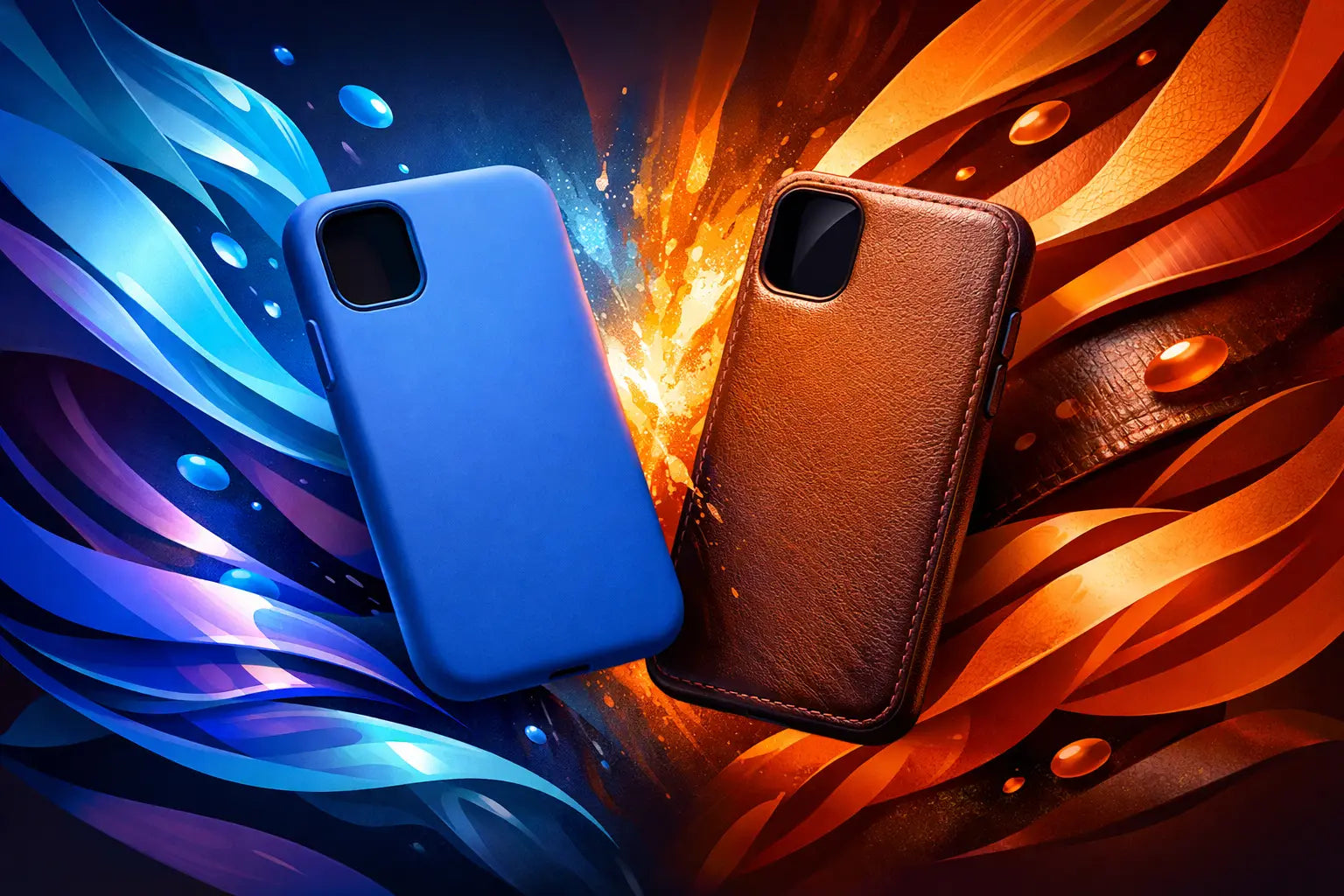
You feel the difference before you even see it. In the silicone case vs leather debate, the real choice is less about hype and more about how your phone fits your life - your commute, your outfit, your grip, and how much chaos your device survives in a week.
Some people want a case that looks polished the second it comes out of the box. Others want something soft-touch, grippy, and low-stress from day one. Both materials can look good. Both can protect your phone. But they wear differently, feel different in hand, and send a very different style message.
Silicone case vs leather: the biggest difference
Silicone is the easier, more casual pick. It usually has a smooth, slightly rubberized finish that adds grip and keeps your phone from sliding around on desks, car seats, and couch arms. It feels modern, lightweight, and practical.
Leather leans more elevated. It has a classic look, a firmer hand feel, and a finish that often gets better - or at least more lived-in - with age. It tends to appeal to people who want their phone case to feel like part of their personal style, not just a protective shell.
That said, this is not simply a battle between practical and premium. A good silicone case can still look sharp, especially in bold colors or clean matte finishes. A leather case can still be functional, especially if it is well-shaped, slim, and built with solid button coverage. The better question is what kind of daily use you actually put your case through.
How each material feels in real life
If you text one-handed, scroll on the move, or keep your phone in your hand more than your pocket, feel matters a lot.
Silicone is all about grip
Silicone cases are popular for a reason. They feel soft, cushiony, and secure. That extra grip can make a real difference if your phone is large, your hands are small, or you are constantly multitasking. They are also great if your phone tends to slip out of joggers, hoodie pockets, or glossy surfaces.
The trade-off is that some silicone finishes can pick up lint or feel tacky over time, especially lower-quality ones. If the texture is too sticky, it can also drag in and out of tighter pockets.
Leather feels smoother and more refined
Leather has a more structured feel. It is usually less grippy than silicone, but more polished in the hand. Some people love that because it feels sleek and mature. Others find it slightly less secure, especially on bigger devices.
What makes leather interesting is that it changes. It can soften, develop marks, and build character as you use it. If you like things that age with you, that is a plus. If you want your case to look exactly the same month after month, it may not be.
Protection is not just about material
A lot of shoppers assume silicone is softer, so it must be safer. Not always. Protection depends on the full build - raised edges, inner structure, corner reinforcement, camera lip, and fit.
Silicone has natural shock-absorbing appeal, which makes it a strong choice for everyday drops and bumps. It is especially solid for casual users who want dependable protection without bulk. But super-thin silicone cases can still be underwhelming if they do not have enough structure underneath.
Leather on its own is not a high-impact armor material. It is more often used as an outer finish layered over a harder shell. That means a leather case can still protect well, but the leather itself is usually not doing all the heavy lifting. The internal frame matters.
So if you are choosing between silicone and leather, do not stop at the surface. Look at the shape of the corners, the depth around the camera, and whether the case actually fits tightly. A beautiful case that shifts, loosens, or leaves edges exposed is not a flex.
Style is where the split gets real
This is the part people pretend does not matter. It absolutely matters.
Your phone is on the table during brunch, in your hand on the train, in every mirror selfie, and probably next to your laptop half the day. The case you choose says something, whether you mean it to or not.
Silicone gives you more room to play
Silicone works especially well for brighter colors, modern neutrals, playful finishes, and trend-driven looks. It can feel sporty, clean, minimal, or loud depending on the design. If you like switching cases based on mood, outfit, or season, silicone makes that easy.
It also pairs naturally with a younger, more expressive aesthetic. Think color-pop accessories, clean camera cutouts, and a phone that feels current instead of corporate.
Leather keeps things classic
Leather tends to sit in a more timeless lane. Black, tan, brown, deep green - these shades feel grounded and put-together. It is less about making a bold statement and more about keeping your setup polished.
That does not make leather boring. It just has a narrower vibe. If your style leans minimalist, tailored, or understated, leather can look great. If you want your phone case to feel fashion-forward, graphic, or a little more fun, silicone usually gives you more range.
Durability over time
Here is where personal tolerance matters.
Silicone usually resists scratches better in the sense that it does not show them the way leather can. It is also less likely to look dramatically different after a few months. But depending on finish quality, it can attract dust, collect smudges, or develop shiny spots in areas with a lot of friction.
Leather ages more visibly. Some people call that patina. Others call it wear. Neither is wrong. If your case picks up scuffs, darkens at the edges, or changes tone from hand oils and sunlight, that is normal. The question is whether you think that looks cooler or just older.
If you are tough on your phone and want something that still looks crisp with less babysitting, silicone is often easier. If you like materials that tell a story over time, leather has the edge.
Silicone case vs leather for MagSafe users
If you use MagSafe charging, wallets, ring holders, or battery packs, case performance matters more than ever.
Both silicone and leather cases can be MagSafe-compatible, but compatibility is about the magnet array and build precision, not just the exterior material. A well-made silicone case can give you a secure magnetic snap and a lightweight feel that works nicely with chargers and accessories. A leather case can do the same, but thickness and alignment have to be right.
What you want is a case that keeps accessories attached confidently without adding unnecessary bulk. If the magnet feels weak or the case wall is too thick, the material will not save it.
For people who swap accessories often, silicone can feel a little more versatile because it is lighter and usually more casual in daily use. But if you want a dressier look and still rely on magnetic charging, a properly designed leather case can absolutely keep up.
Which one is better for your routine?
If your day is fast, hands-on, and a little unpredictable, silicone usually makes more sense. It is grippy, low-maintenance, and easy to style with a more playful or modern setup. It also tends to feel more approachable price-wise, which matters if you like rotating cases instead of committing to one forever.
If your phone lives in cleaner spaces, your style leans elevated, and you like accessories that feel more premium in hand, leather may suit you better. It is less about maximum grip and more about texture, presence, and that broken-in look over time.
There is also a middle ground here. Some people keep a leather case for work, dinner, or travel days when they want a sharper look, then switch to silicone for everyday errands or weekends. If your phone case is part protection and part outfit, that move makes perfect sense.
For brands like CASETEROID that blend protection with standout design, the bigger idea is simple: your case should not force you to choose between personality and performance. The best one is the one you actually want to carry every day.
The smarter choice is the one you will enjoy using
Silicone wins on grip, easygoing wear, and trend-friendly style. Leather wins on texture, polish, and that more classic feel. Neither is automatically better. It depends on whether you want your phone case to feel bold and effortless or clean and elevated.
Pick the material that matches your habits, not just your first impression. A case looks best when it fits your life as well as your phone.
MagSafe Accessories Trends 2026 to Watch
Buy 2 Get 2 Free Phone Case Deals That Win