
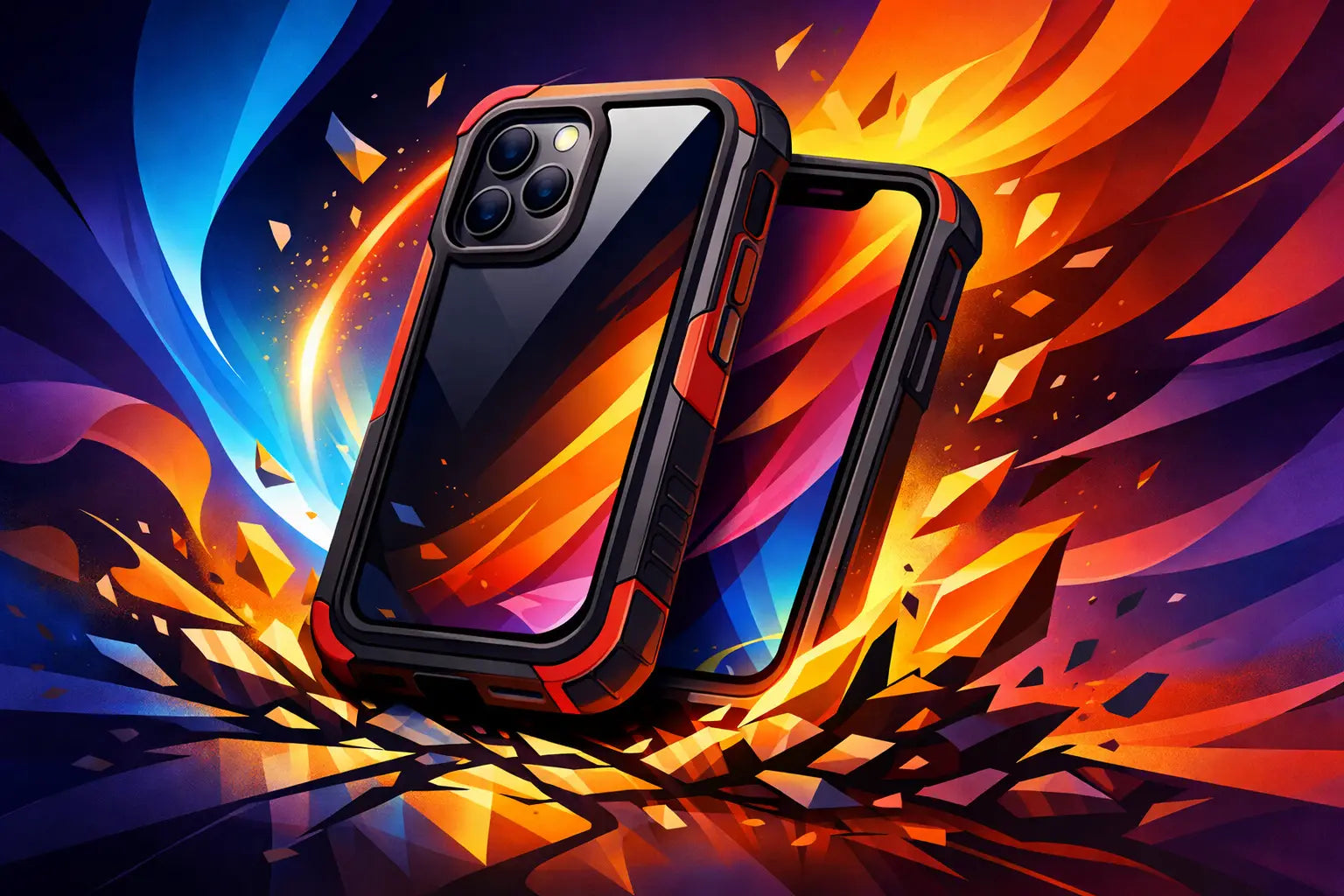
Your phone slips once on concrete and suddenly the camera lip, screen edge, and corners all feel way more important than they did five seconds ago. That is exactly why a shockproof iPhone case with raised bezel stands out from a basic case. It is not just about covering the back of your phone. It is about building a buffer around the parts that usually take the hit first.
For most iPhone users, the sweet spot is simple - real drop protection, a slim enough shape for everyday carry, and a look that does not feel boring. Getting all three can be trickier than it sounds. Some cases are ultra protective but bulky. Others look amazing in product photos and fall short the first time they hit tile. The good ones balance impact resistance, edge protection, grip, and style without making your phone feel like a brick.
What a raised bezel actually does
A raised bezel is the slightly lifted edge around the screen and, in many designs, around the camera area too. It creates separation between the glass and flat surfaces like tables, counters, desks, and nightstands. That sounds minor until you set your phone face down or it lands screen-first during a drop.
Without that lip, the glass is more exposed. With it, the case takes the first contact instead of the display. The same logic applies to the rear camera module, especially on newer iPhones where lenses sit higher and are easier to scrape.
The key detail is height. If the bezel is too shallow, it may not do much once you add a screen protector or if the phone lands at an angle. If it is too tall, swipe gestures can feel awkward. A well-designed shockproof iPhone case with raised bezel keeps that edge protective but still comfortable for daily use.
Why shockproof matters beyond one big drop
A lot of people hear shockproof and picture dramatic falls from a staircase or a parking garage. Real life is less cinematic. Most damage happens from routine accidents - a slip out of your lap getting out of the car, a knock off a kitchen counter, a corner hit on gym flooring, or a face-down drop from your hand while texting.
Shockproof protection is really about how the case manages energy. Better materials absorb and spread impact instead of sending all that force straight into the phone frame and glass. That usually means reinforced corners, flexible inner layers, and tougher outer shells. Corners matter the most because they are common impact points and they concentrate force fast.
This is where cheap, stiff plastic cases usually lose. They may look clean on day one, but they do very little to cushion a hard hit. A case that can flex slightly and use impact-ready materials will almost always do a better job in everyday accidents.
The features that separate a good case from a good-looking one
If you are shopping for a shockproof iPhone case with raised bezel, the spec sheet only tells part of the story. What matters is how the design works as a whole.
Material choice is huge. TPU adds flexibility and grip, while polycarbonate helps with structure. Hybrid builds often perform better than single-material shells because they combine cushioning with rigidity. Some cases also add air-pocket corner construction or internal impact patterns that help disperse force.
Grip is underrated. If a case feels slick, it is more likely to drop in the first place. Slight texture on the sides, a soft-touch finish, or a shape that sits securely in your hand can make a real difference. Protection starts before impact.
Button feel matters too. Overly stiff button covers are annoying, but loose ones feel cheap. The best cases keep tactile feedback crisp while protecting the openings around controls, speakers, and charging ports.
And then there is fit. A case should hug the iPhone closely with no weird looseness around the corners. Gaps can reduce protection and make the case wear out faster.
Shockproof iPhone case with raised bezel vs slim fashion case
This is where it depends on how you use your phone. If your top priority is having the thinnest possible profile, a lightweight fashion case may be enough for scratch protection and minor bumps. But if you commute, travel, work on the go, or are just honest about how often your phone slips, you probably want more than surface-level coverage.
That does not mean you have to settle for a bulky utility look. A newer generation of cases blends cleaner silhouettes with stronger drop defense, which is exactly why more people want protection that still feels styled. Bold prints, glossy finishes, translucent color, matte texture, and MagSafe-ready builds can all exist in the same case without sacrificing the basics.
A case should match your vibe, but it should also survive your routine. That balance is where the best designs win.
How MagSafe changes the decision
For iPhone users, MagSafe compatibility is no longer a nice extra. It is part of daily convenience. Wireless charging, magnetic wallets, mounts, and power banks all work better when the case is built with magnets that actually align well.
The problem is that not every protective case gets this right. Some thick cases weaken the magnetic hold. Others technically support wireless charging but make the connection less reliable. If you use MagSafe often, look for a case designed around it, not one that treats it like an afterthought.
A shockproof build and a raised bezel should not cancel out magnetic function. A strong case can still be accessory-friendly when the design is intentional.
Style is not extra - it is part of the product
Let’s be real. Most people in the market for a new case are not choosing based on drop specs alone. You carry your phone everywhere. It sits on tables, shows up in mirror selfies, rides in your hand during coffee runs, and basically functions like part of your outfit. So yes, design matters.
That is why the smartest case choice is one that protects without looking generic. Clean lines, expressive prints, standout colorways, and polished details make a case feel personal instead of purely practical. CASETEROID gets that balance right by treating durability and style like they belong together, not like one has to be traded for the other.
The best case is the one you actually want to keep on your phone. If it looks good, feels right, and protects the vulnerable areas, you are less likely to swap it out for something flimsier later.
What to check before you buy
Start with the bezel around both the screen and camera. Product photos can be misleading, so pay attention to whether the protective lip is clearly visible. After that, look at the corners. Reinforced corners usually signal better drop handling than a flat, one-piece shell.
Then think about your daily habits. If you are always using wireless charging, gym mounts, or car mounts, MagSafe strength should be on your checklist. If you are rough on your phone, prioritize grip and material durability over an ultra-thin profile. If you care about aesthetics first, do not settle for a pretty case that leaves the screen edge exposed.
Also consider pocket feel. Some shockproof cases are protective but awkward in jeans or small bags. Others keep a low-profile shape while still adding meaningful structure. There is no perfect case for every person, only the one that matches your drop risk, accessory use, and style standards.
The smart pick is the one you will trust daily
A good case should quietly handle the ugly moments - the hard drop, the messy desk, the face-down set-down, the rushed grab off the passenger seat. A better one does all that while still looking sharp in your hand.
That is the appeal of a shockproof iPhone case with raised bezel. It covers the details that matter most, especially the edges, corners, screen, and camera, while giving you room to choose a look that feels like you. If your phone goes everywhere with you, your case should be ready for more than just looking cute on day one.
Best MagSafe Accessories Bundle to Buy
Phone Case Materials Comparison That Helps