
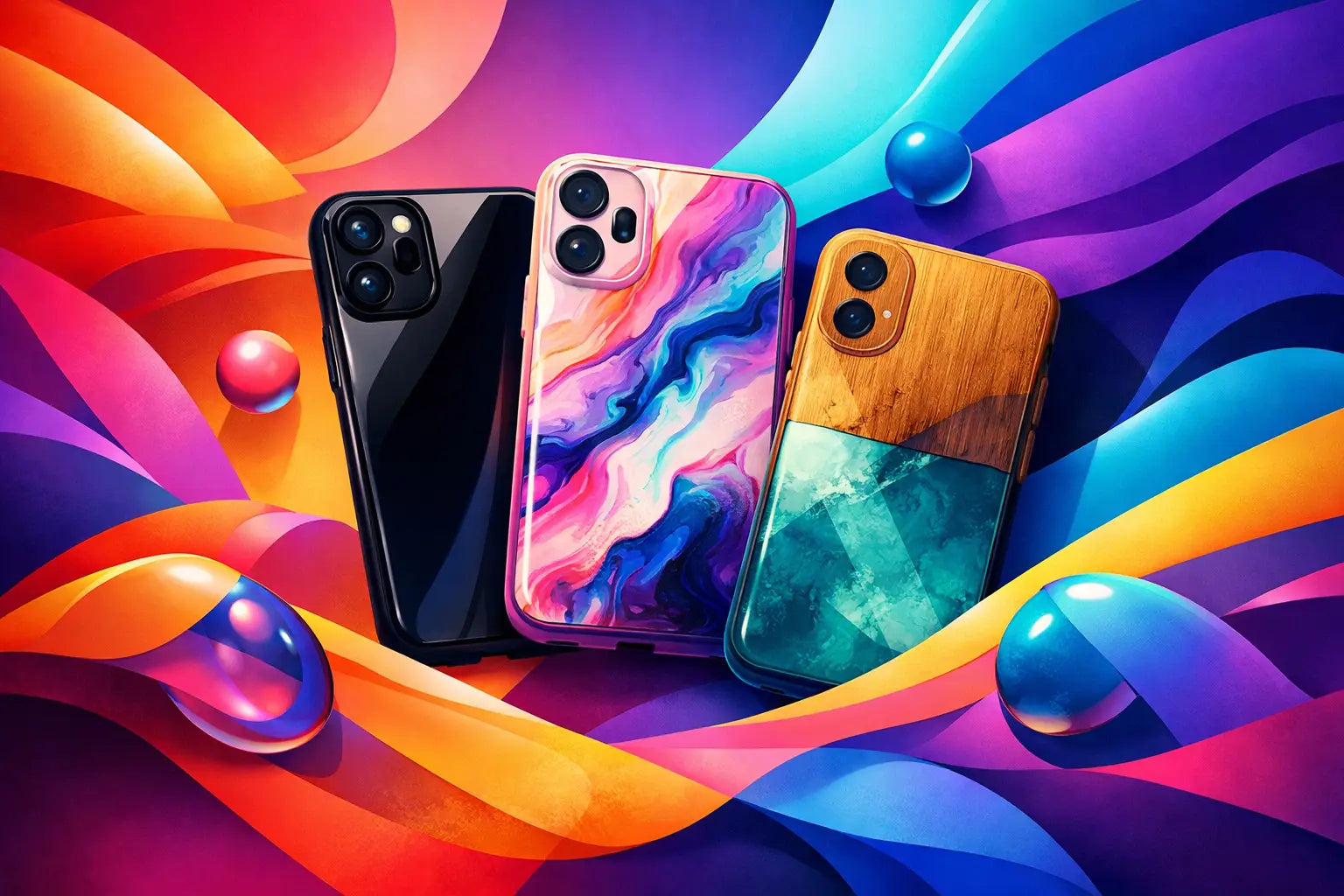
Your phone case is the accessory you hold more than any other. It has to survive coffee runs, crowded commutes, gym bags, and the occasional spectacular drop - while still looking like it belongs in your hand. This guide to phone case materials breaks down what each option actually feels like, how it protects, and which vibe it brings to your everyday setup.
Why phone case material matters
A great print or bold color gets your attention first, but the material decides whether a case stays comfortable, protects the corners, resists yellowing, or slides out of your pocket at the worst possible moment. There is no single best material for every phone owner. The right choice depends on how you use your device, whether you want a slim profile or serious impact protection, and how much you care about texture.
Material also affects the details people often notice after checkout: button responsiveness, wireless charging performance, grip, bulk, and how well a case holds its shape after months of use. If you use MagSafe accessories, the case construction matters just as much as the magnet itself. A strong magnetic ring needs a stable, well-fitted body around it.
The guide to phone case materials: what each one does best
TPU: flexible, grippy, and built for everyday drops
TPU, short for thermoplastic polyurethane, is one of the most common phone case materials for a reason. It is flexible enough to install and remove without a struggle, yet tough enough to absorb shock better than a hard plastic shell on its own. Its slightly soft, rubber-like feel also adds grip without the extra thickness of a heavily padded case.
TPU is especially good around edges and corners, where phones are most likely to take a hit. Many protective cases use TPU as the inner bumper, even when the outside has a different finish or a hard back panel. It can be clear, colored, matte, glossy, or printed, making it a solid base for cases that want protection and personality in the same piece.
The trade-off is that clear TPU can yellow over time, especially with sunlight, heat, and everyday skin oils. Better-quality formulations slow that process down, but no transparent case stays perfectly fresh forever. If a crystal-clear look is your priority, choose a case designed with anti-yellowing treatment and clean it regularly.
Polycarbonate: the hard-shell hero
Polycarbonate, often called PC, is a rigid plastic known for being lightweight and impact resistant. It gives a case a more structured feel than TPU and makes an excellent outer layer for detailed artwork, glossy finishes, and crisp graphic designs. If you love a case with a clean shape and high-definition print, polycarbonate is usually doing a lot of the visual work.
On its own, PC is less grippy and less flexible than TPU. That is why well-designed hybrid cases pair a hard polycarbonate back with softer TPU edges. You get a smooth, durable surface that shows off the design, plus a cushioned bumper where it counts.
A hard-shell case can be a smart choice for someone who wants a slim, polished profile. Just remember that “hard” does not automatically mean “more protective.” A rigid shell spreads impact across the back, but it needs flexible shock-absorbing material around the edges to perform at its best in a real drop.
Silicone: soft touch with a clean, minimal look
Silicone cases have a smooth, soft-touch finish that feels comfortable from the first hold. They are often chosen for their understated look, easy grip, and pleasantly cushioned feel. A silicone case can make a large phone feel less slippery without turning it into a brick.
The material is good at absorbing minor bumps and gives buttons a soft, responsive press. It also works beautifully with solid colors, making it a favorite for monochrome looks and color-coordinated accessories.
The downside is that silicone can attract lint, dust, and pocket debris more than harder materials. Some finishes may also show smudges or wear at high-contact areas. If you are always pulling your phone from a denim pocket or tossing it into a packed tote, a matte TPU or hybrid case may stay cleaner-looking longer.
Hard plastic: slim, simple, and design-forward
Hard plastic cases are usually made from polycarbonate or similar rigid plastics. They are thin, lightweight, and ideal when the priority is showcasing artwork, patterns, or a sleek phone silhouette. They also tend to be easy to wipe clean, which is useful if your case sees makeup bags, kitchen counters, or travel days.
But slim hard plastic has a clear limitation: it does not compress much during impact. Without raised edges, reinforced corners, or a softer inner layer, it offers more scratch protection than drop protection. It is best for careful users who want minimal bulk, not for anyone whose phone routinely meets concrete.
Leather and vegan leather: elevated texture, different priorities
Leather cases bring a richer texture and a more polished look than plastic-based options. Real leather develops a patina over time, which can make each case feel more personal with use. Vegan leather offers a similar visual effect without using animal hide and is often easier to maintain.
Neither option is automatically more protective than TPU or a hybrid build. The protective performance comes down to what sits beneath the leather surface. A leather-wrapped case with a rigid core and reinforced corners can be highly functional. A thin folio-style cover may be better suited to scratch protection and a more dressed-up aesthetic.
Leather is for people who want their tech to feel less disposable. It is a style decision first, but the right construction can still provide dependable daily defense.
Hybrid materials: the best balance for most people
Hybrid cases combine materials strategically, usually a TPU bumper with a polycarbonate back. This is the sweet spot for anyone who wants to keep a bold design visible without giving up drop protection. The flexible bumper handles shock, while the hard back maintains shape and provides a smooth canvas for graphics, colors, and finishes.
For many tech-forward shoppers, hybrid construction makes the most sense because it does not force an all-or-nothing choice. You can have a case that feels slim enough for daily use, has raised lips around the screen and camera, and still makes your phone look unmistakably yours.
CASETOROID-style cases often lean into this combination because it supports expressive designs while keeping the practical features people use every day, including MagSafe-compatible construction and protective edge coverage.
Material is only half the protection story
Two cases made from the same material can perform very differently. Look beyond the material name and check how the case is built. Raised bezels around the screen and camera help prevent direct contact with tables and pavement. Reinforced corners give extra support at common impact points. Responsive button covers keep the case from feeling stiff, and precise cutouts prevent charging and speaker issues.
Thickness matters, but more thickness is not always better. A bulky case may provide more cushion, yet it can feel awkward in a small pocket or make a sleek phone harder to use one-handed. A thoughtfully engineered hybrid case often delivers better day-to-day protection than an oversized case made from a single material.
If you use MagSafe chargers, wallets, power banks, or ring holders, pay attention to magnetic alignment. A case can technically support wireless charging but still have weak magnetic hold. MagSafe-compatible cases place a magnetic ring in the correct position so accessories attach securely instead of sliding off mid-scroll.
Match the material to your real life
Choose TPU or a TPU-polycarbonate hybrid if your phone takes regular knocks and you want a secure grip. Choose silicone if you love a soft, clean finish and do not mind occasional lint cleanup. Choose a slim hard-shell case if design and minimal bulk matter most, but be realistic about how often you drop your phone. Choose leather or vegan leather if you want a more elevated texture and are willing to give it a little care.
Your color choice matters, too. Clear materials put your phone’s original finish on display but need more maintenance. Darker matte cases hide everyday marks well. Glossy hard backs make colors and prints pop, while textured finishes offer a more tactile, low-slip feel.
The case that earns a spot on your phone should feel good every time you pick it up, not just look good in the mirror. Pick the material that fits your actual routine, then choose the design that makes carrying your phone feel more like a statement than a compromise.
How to Organize Tech Accessories Without the Tangle
Review Slim MagSafe Power Banks: What Matters