
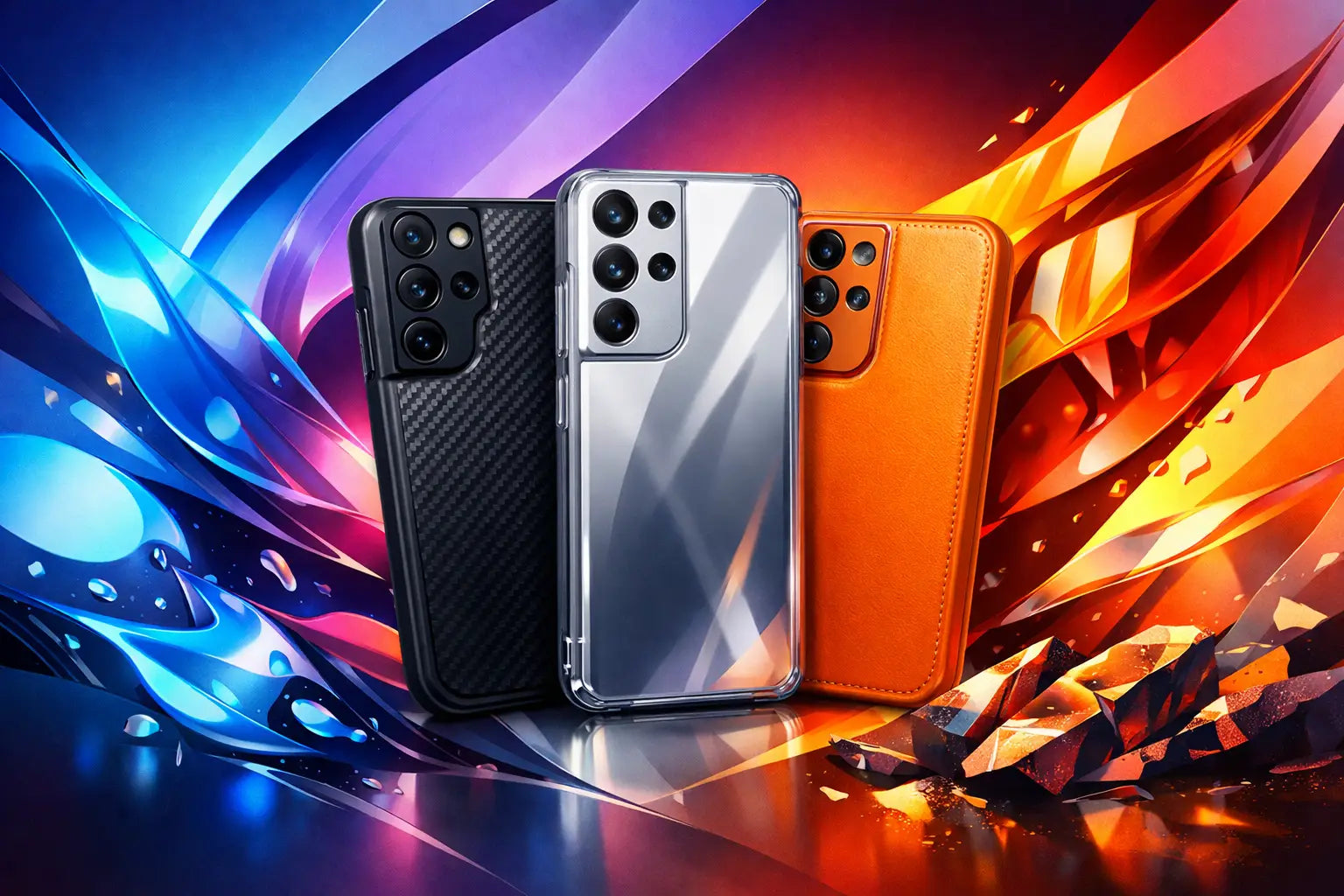
Your Galaxy is the one thing that lands face-down at the worst possible moment: on concrete outside the coffee shop, tile in the bathroom, or the parking lot during a rushed exit. The best Samsung case materials do more than soften that impact. They decide how your phone feels in your hand, how well it holds up to daily wear, and whether its look still feels like you months from now.
That is why “protective” is not enough. A case can have thick corners and still feel slippery. It can look great on day one and turn yellow, peel, or collect lint by week three. The right material should match your phone habits and your personal style, whether you carry a Galaxy S Ultra, a compact Galaxy S model, or a foldable Galaxy Z Flip.
Best Samsung Case Materials, Compared
There is no single best material for every Samsung owner. TPU is a standout for shock absorption and grip. Polycarbonate brings structure and crisp design detail. Silicone feels soft and clean in the hand. Hybrid cases combine materials to cover more bases. For most people, a well-made hybrid case is the sweet spot because it balances slim style with real everyday protection.
The material mix matters just as much as the material itself. A rigid shell can spread impact, while flexible edges help cushion the corners where drops hit hardest. Add a raised camera surround and a lip around the screen, and a case becomes far more useful than a pretty back panel.
TPU: The Everyday Protection Favorite
TPU, or thermoplastic polyurethane, is the flexible material behind many of the best protective Samsung cases. It has a slightly rubberized feel, which means better grip when you are texting one-handed, taking mirror selfies, or pulling your phone out of a packed bag.
Its biggest strength is impact absorption. TPU flexes under pressure instead of cracking immediately, helping reduce force around the corners and sides of your Galaxy. It also works beautifully for slim cases because it can provide meaningful protection without turning your phone into a brick.
The trade-off is that clear TPU can discolor over time, especially with heat, sunlight, skin oils, and dyed denim. A transparent case is still a great choice if you love your phone’s original color, but it is worth choosing a quality version with anti-yellowing treatment. If you want a case that stays visually sharp longer, printed or tinted TPU is often the smarter move.
Polycarbonate: Clean Lines and Strong Structure
Polycarbonate, often called PC, is a hard plastic that gives cases their firm, shaped feel. It is ideal for vivid graphics, glossy finishes, crisp cutouts, and cases that need to hold their form. If your case is part of your outfit, not just a safety accessory, polycarbonate gives designers a strong canvas for bold color, artwork, and polished details.
On its own, PC is less forgiving than TPU during a hard drop. A fully hard case can feel sleek but may transfer more impact to the phone than a flexible material would. That does not make it a bad option. It simply means it is best used as part of a hybrid design, usually with shock-absorbing TPU around the edges.
PC also makes sense for Samsung users who want a precise fit. Galaxy phones have prominent camera arrays, distinct button placements, and on some models, curved edges that deserve a case with clean alignment. A structured polycarbonate back helps keep everything looking intentional.
Silicone: Soft-Touch Style With a Catch
Silicone cases are popular for a reason. They feel smooth, soft, and comfortable, with a more elevated finish than basic hard plastic. Matte silicone can give a Samsung phone a minimalist, fashion-forward look while adding enough grip to make it less likely to slide off a desk or car seat.
Silicone is especially good if hand feel is your priority. It has a cushioned texture that makes even a large Galaxy S Ultra easier to hold. It can also handle minor bumps well, although it usually does not offer the same level of impact defense as a thoughtfully engineered TPU or hybrid case.
The catch is maintenance. Silicone can attract dust, pocket lint, and pet hair, particularly with softer finishes. Lighter colors may show marks faster, too. Choose silicone when you want a clean, soft-touch aesthetic and do not mind wiping your case down regularly. It is a style-first material that can still offer practical daily coverage.
Hybrid Materials: The Best All-Around Choice
For shoppers who want a case that looks good and works hard, hybrid construction is hard to beat. These cases typically pair a polycarbonate back with TPU bumpers, combining a firm outer structure with flexible impact protection where it matters most.
This combination solves a common problem: you should not have to choose between a slim profile and confidence when your phone slips. The PC back keeps graphics, colors, and patterns looking crisp. The TPU frame adds grip and cushions the edges. Together, they create a case that feels polished without feeling delicate.
Hybrid materials also work especially well with magnetic accessories. A case designed with a properly aligned magnetic ring can support MagSafe-style chargers, wallets, power banks, and ring holders. Samsung phones are not limited to one look or one setup - your case can be the base for a whole accessory rotation.
At CASETEROID, this balance is what makes a statement case worth carrying. A bold design should still have reliable edges, camera protection, and materials that can keep up with real life.
How Material Affects Your Samsung Case Experience
Material affects more than drops. It changes grip, bulk, wireless charging performance, print durability, and how the case ages. Before choosing, think about what annoys you most about past phone cases.
If you have dropped your phone more than once this month, prioritize TPU edges or a hybrid build with reinforced corners. If every case you own turns into a lint magnet, avoid very soft silicone finishes. If you like swapping chargers, wallets, and power banks, choose a magnet-compatible case made with a stable, structured back.
For Galaxy Z Flip users, material choices become even more specific. A foldable case needs to protect two separate panels without interfering with the hinge or making the phone awkward to open. Flexible TPU sections and lightweight hard shells are often the better formula here. A case that is too stiff or bulky can take away from the whole point of a flip phone: the fun, compact form factor.
Clear, Matte, Glossy, or Textured?
Finish is not a separate material, but it changes your daily experience. Clear cases put your Samsung’s original finish on display, but they require more attention if you want them to stay transparent. Matte cases hide fingerprints better and often feel more secure in the hand. Glossy cases make colors pop, though they can show smudges. Textured finishes add grip and give your phone a more distinctive feel.
For bold printed cases, a hard polycarbonate outer surface is often the best option because it keeps artwork defined and colors vivid. For a softer, understated look, matte TPU or silicone can deliver that clean aesthetic without screaming for attention.
What to Look for Beyond the Material
The best material cannot save a poorly designed case. Check the protective details before you commit. Raised bezels should sit above the screen and camera lenses when the phone is placed face-down or back-down. Buttons should feel responsive, not stiff. Cutouts should leave room for charging cables and speakers without looking oversized.
Also consider thickness honestly. Ultra-thin cases are great for people who hate bulk and mostly need scratch protection. They are not the best choice for frequent drops. On the other hand, an extra-rugged case can be unnecessary if your phone rarely leaves a desk and you care more about a sleek silhouette. Your case should fit your routine, not someone else’s idea of protection.
For most Samsung users, a slim hybrid case with TPU edges, a durable polycarbonate back, and a raised camera frame offers the strongest mix of function and style. It gives you room to choose a design with personality while keeping your Galaxy ready for the everyday chaos that comes with actually using it.
Pick a material that earns its spot in your hand: one that protects your phone, works with the accessories you use, and looks like it belongs to you.
Samsung Case Buying Guide for Style and Safety
What Is an Anti Fingerprint Phone Case Finish?